
Key Takeaways
Preventive care for older adults focuses on maintaining independence and wellbeing before major health decline occurs.
Early caregiver support may help with delaying functional decline through routine monitoring, companionship, and light supervision.
Light assistance at home does not always mean intensive care and can include medication reminders, accompanied walks, and safety support.
Introducing caregiving earlier may reduce avoidable falls, hospital admissions, and caregiver burnout within families.
In Singapore, ageing-in-place support and community-based caregiving are becoming increasingly important as more seniors live longer with chronic conditions.
Introduction
Many families only begin exploring caregiving support after a hospital stay, fall, or serious medical diagnosis. As long as an ageing parent can still walk independently, prepare simple meals, or manage daily routines, it is easy to assume they are “not old enough” for help yet.
However, ageing does not usually begin with one sudden event. Small changes often appear gradually, including slower walking speed, increased fatigue, mild forgetfulness, reduced confidence outdoors, or growing social isolation. While these signs may seem manageable at first, they can quietly affect long-term wellbeing and independence over time.
This is where preventive care for older adults becomes increasingly important. Rather than waiting for a crisis to occur, preventive caregiving focuses on supporting routines, mobility, safety, and emotional wellbeing earlier, before functional decline becomes more severe.
Understanding the Difference Between Life Span and Health Span
Many people assume healthy ageing simply means living longer. In reality, ageing experts increasingly distinguish between life span and health span.
Life span refers to the total number of years a person lives. Health span refers to the number of years they remain physically, cognitively, emotionally, and socially well enough to function independently.
Singapore has one of the highest life expectancies globally, but living longer does not automatically mean living well for longer. Many older adults spend later years managing chronic illnesses, mobility limitations, or reduced confidence with daily activities.
This growing focus on improving health span through routine care has shifted how many families now view ageing support.
Why This Difference Matters for Families
A parent may still appear relatively active while quietly experiencing subtle changes that signal a narrowing health span, including:
- Reduced balance and stability
- Slower recovery after illness
- Medication management difficulties
- Lower stamina during outings
- Mild confusion or forgetfulness
- Increased withdrawal from social activities
Families who recognise these signs earlier are often better positioned to introduce support gradually rather than making rushed decisions during emergencies.
Why Early Caregiver Support Is Preventive Rather Than Reactive
Caregiving is often misunderstood as something only necessary for bedridden seniors or severe medical conditions. In reality, early caregiving can be relatively light and highly preventive.
A caregiver does not always replace independence. Instead, they may help reinforce it.
Delaying Functional Decline Through Daily Structure
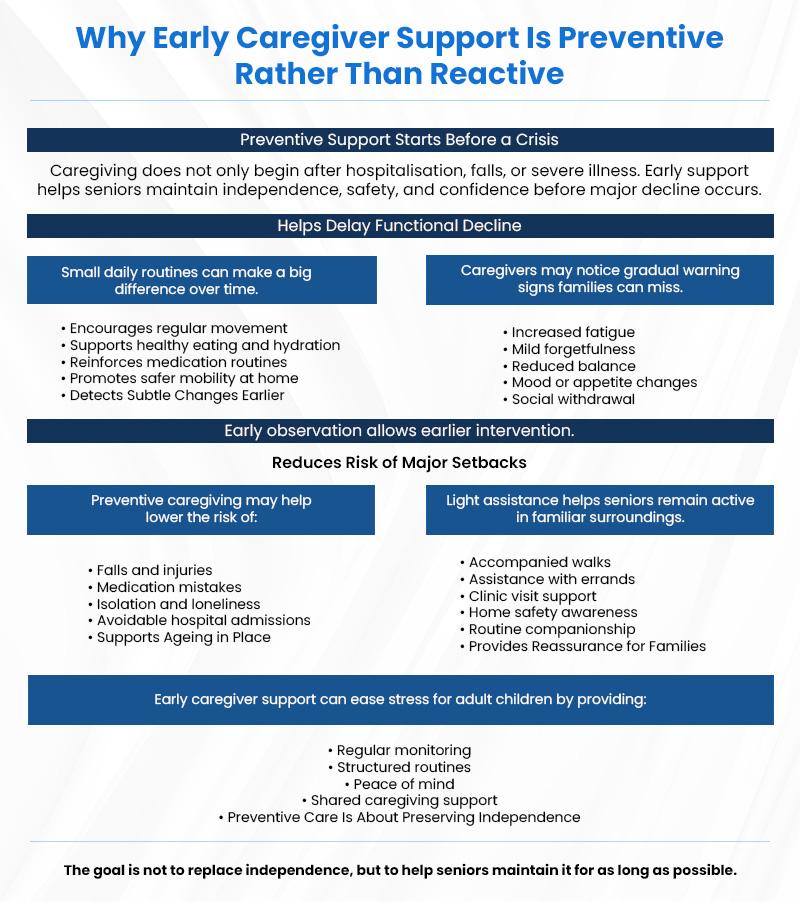
Small daily routines play a major role in maintaining long-term function. Seniors who remain physically active, socially engaged, and mentally stimulated often maintain independence longer.
Caregivers can support this through:
Encouraging regular movement and walking
Providing medication reminders
Monitoring hydration and meals
Supporting sleep routines
Encouraging safe outdoor activity
Observing subtle physical or behavioural changes
These routines contribute to preventive steps by reducing avoidable setbacks such as falls, dehydration, isolation, or medication errors.
Supporting Confidence Before a Crisis Happens
Many seniors gradually become less confident outdoors long before family members notice obvious mobility problems.
For example, a parent may:
- Stop visiting nearby markets alone
- Avoid public transport
- Feel anxious walking downstairs
- Reduce social activities after minor falls or dizziness
- Become hesitant to attend medical appointments independently
Light caregiver support can help seniors remain engaged in familiar environments while maintaining confidence in daily routines.
What Light Assistance at Home Actually Looks Like
When people hear the word “caregiver,” they often imagine intensive medical care or constant supervision. However, early caregiving usually begins with practical, everyday support.
Routine Check-Ins and Companionship
Loneliness and isolation can quietly affect both mental and physical wellbeing in older adults. Having regular conversation, shared meals, or companionship helps seniors remain socially engaged and emotionally supported.
Medication Reminders
Many seniors manage multiple prescriptions daily. Simple reminders help reduce missed doses or accidental overmedication.
Accompanied Walks and Activity
Short walks around the neighbourhood, visits to nearby parks, or accompanied errands help maintain mobility, balance, and confidence.
Home Safety Monitoring
Caregivers may notice fall hazards such as loose rugs, poor lighting, cluttered walkways, or slippery bathroom areas before accidents occur.
Assistance With Appointments and Errands
Some seniors remain physically independent but feel overwhelmed managing transport, appointments, or shopping alone. Gentle support helps preserve routine without removing autonomy.
This form of light assistance often acts as a protective layer that helps seniors continue ageing comfortably within familiar surroundings.
The Shift Towards Preventive Care in Singapore
Singapore’s ageing population has accelerated conversations around ageing in place, preventive healthcare, and community-based support.
Rather than relying only on hospital-based intervention, families are increasingly encouraged to introduce supervision and support earlier.
Why Ageing in Place Matters
Many seniors prefer remaining within familiar HDB estates and neighbourhoods where they already have:
Existing social connections
Familiar routines
Nearby amenities
Emotional comfort and stability
Preventive caregiving helps make this possible for longer.
Some families may eventually explore additional support models such as elderly co living, especially when companionship and supervised living become increasingly important.
Others may initially consider options through a maid agency for elderly care, though it is important to understand the difference between general domestic assistance and trained caregiving support.
Emotional Resistance Towards Early Caregiving
Introducing caregiving support can feel emotionally difficult for both seniors and adult children.
Parents may worry that accepting help means losing independence. Adult children may fear they are introducing support “too early” or failing in their caregiving responsibilities.
Within many Singaporean households, these conversations are closely tied to cultural expectations surrounding filial responsibility and family caregiving, where introducing external help can sometimes be incorrectly viewed as a failure to meet one's obligations.
However, preventive caregiving reframes support differently.
The goal is not to take over daily life. The goal is to maintain independence, safety, and quality of life for as long as possible.
When Should Families Start Exploring Caregiver Support?
There is rarely a perfect moment to begin caregiving discussions. However, earlier planning often creates smoother transitions and better long-term outcomes.
Families may consider speaking with a caregiving provider when they notice:
- Increasing fatigue or slower movement
- Repeated medication mistakes
- Reduced appetite
- Mild balance instability
- Increased isolation
- Difficulty managing errands independently
- Growing stress among family caregivers
Seeking advice early allows support to be introduced gradually and thoughtfully rather than during a crisis.
Families exploring long-term support may also begin researching professional elderly caretaker services to better understand available caregiving arrangements, costs, and care structures.
Frequently Asked Questions
Is preventive care for older adults only for seniors with medical conditions?
No. Preventive caregiving may support relatively independent seniors who are beginning to experience mild mobility changes, fatigue, forgetfulness, or social isolation. Early support focuses on maintaining wellbeing and routines before major decline occurs.
Does hiring a caregiver mean my parents have lost independence?
Not necessarily. Many seniors receive light support such as medication reminders, companionship, accompanied walks, or safety supervision while continuing to manage many aspects of daily life independently.
How does preventive care for older adults help with delaying functional decline?
Structured routines, movement support, social engagement, and regular monitoring may reduce risks such as falls, dehydration, inactivity, or worsening isolation, all of which can contribute to functional decline over time.
What is the difference between a trained caregiver and a domestic helper?
While domestic helpers may assist with household tasks, trained caregivers are specifically equipped to support seniors through supervision, mobility assistance, routine monitoring, and caregiving-related responsibilities.
Why are more Singapore families exploring caregiving earlier?
As Singapore’s ageing population grows, more families are recognising the importance of preventive support, ageing in place, and reducing avoidable hospitalisations through earlier intervention.
Conclusion
Ageing well is not only about extending the number of years a person lives. It is also about preserving confidence, mobility, emotional wellbeing, and independence throughout those years.
Preventive care for older adults encourages families to shift from reactive caregiving decisions towards earlier, more structured support that protects long-term quality of life.
At Top Faith Senior Care, families are supported by a team founded by two experienced nurses with extensive backgrounds in care for elderly, dementia, and terminally ill patients. Unlike general domestic helper arrangements, Top Faith focuses on trained and certified caregivers who undergo in-house assessments and caregiving training regardless of prior experience. Through AI-smart matching across 25 care factors, secure access to caregiver profiles, video interviews, and MOM-licensed placement support, families are guided through a more structured and transparent caregiving process tailored to each senior’s needs.
Whether your loved one requires light supervision, companionship, mobility support, or more structured daily assistance, early intervention can help preserve dignity and independence before small concerns become larger challenges.
Contact us if you are considering preventive caregiving support for your parent or loved one. We will explore suitable care arrangements based on your family’s needs, lifestyle, and long-term care goals. The team can guide you through caregiver selection, work permit applications, care planning, and caregiver matching with clarity and ongoing support. Speaking with a caregiving provider early may help you better understand the support options available and plan ahead with greater peace of mind.