 Top Faith Senior Care
Shared Stay-in Senior Caregiving Services vs Live-In Caregivers: Key Differences Families Should Understand
Compare shared stay-in senior caregiving services with live-in caregivers in Singapore. Understand care coverage, costs, and suitable options.
## Key Takeaways
- Shared stay-in senior caregiving services are a structured co-living arrangement in which a small group of elderly individuals live together in a residential setting, supported by full-time caregivers who provide daily supervision and assistance.
- A live-in caregiver (MDW) provides continuous supervision and familiarity with the elderly person's daily routines.
- In Singapore, the decision between the two often depends on practical factors such as HDB flat layouts, family work schedules, and whether a household already employs a Migrant Domestic Worker (MDW).
- Each arrangement offers different levels of flexibility, coordination requirements, and continuity of care, which families should evaluate carefully.
- Families exploring [elderly care options at home](/services) can speak with Top Faith care advisors to understand which caregiving model best suits their household and long-term care needs.
## Types of Elderly Support at Home
As elderly care needs increase, families often explore different home-based caregiving arrangements. Two commonly discussed options are shared stay-in senior caregiving services and live-in caregivers. While both terms provide support at home, they are not always used consistently across providers.
Understanding what each arrangement entails in practice helps families choose an option that aligns with their care needs, household dynamics, and long-term expectations.
In Singapore, many seniors age within HDB communities, and family members often manage full-time work commitments. Choosing the right care structure can influence daily routines, supervision, and peace of mind for everyone involved. This becomes particularly important after a hospital discharge, when elderly individuals may require closer monitoring during recovery.
## What Shared Stay-In Senior Caregiving Services and Live-In Caregivers Actually Mean
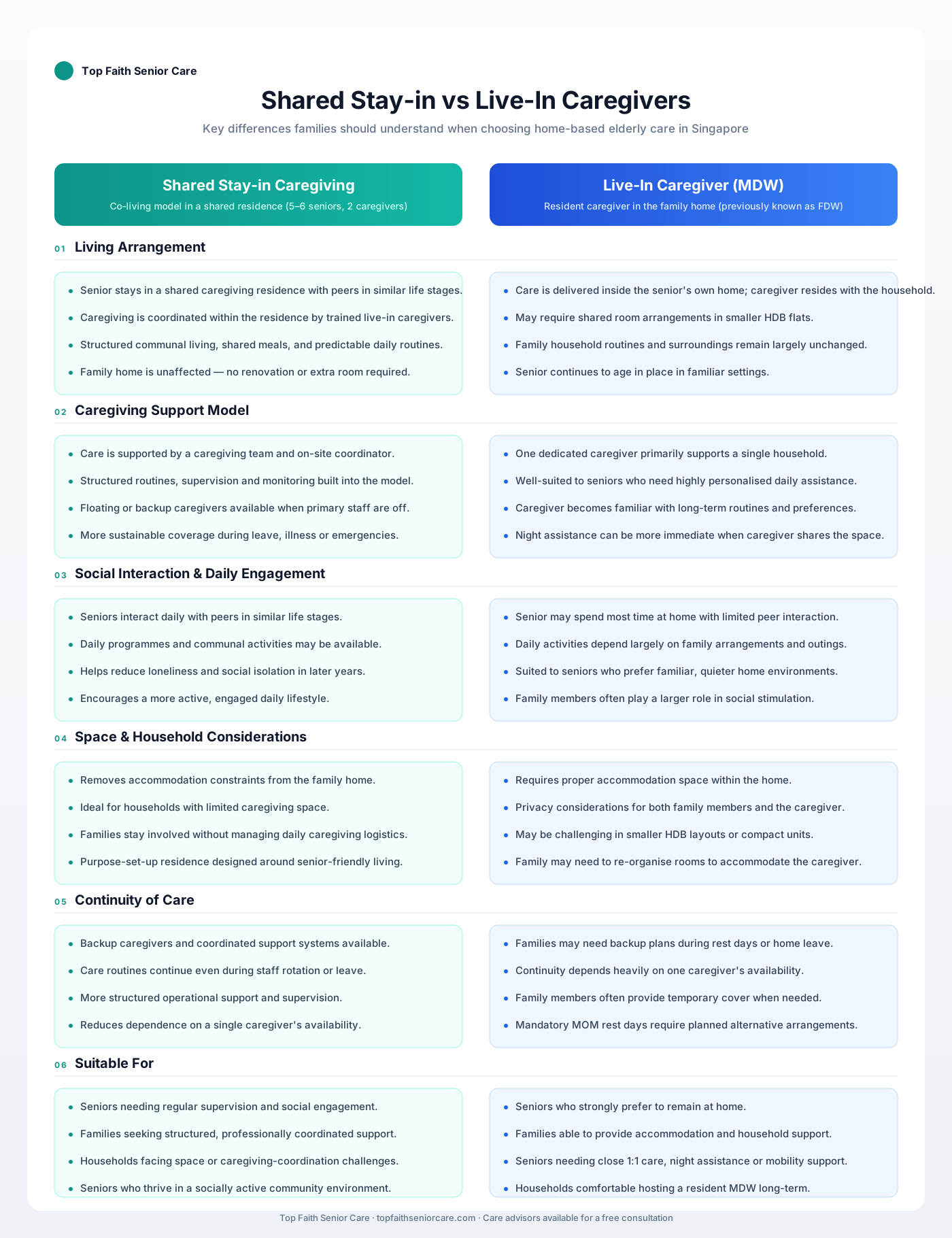
Shared stay-in senior caregiving services refer to a structured co-living model rather than a shift-based or part-time arrangement. In this setup, a small group of elderly individuals, typically around five to six, stay together within the same residential setting, such as an HDB unit.
Care is provided by two live-in [caregivers](/care-professionals) who reside within the home. These caregivers oversee daily routines, provide assistance with activities of daily living, and ensure consistent supervision throughout the day. This shared environment enables care to be delivered in a coordinated, continuous manner while also fostering social interaction among residents.
Live-in caregivers work differently. In this arrangement, one caregiver stays within the household full-time. The caregiver becomes familiar with the elderly individual's habits, routines, and daily rhythms, which often allows care to be delivered more consistently.
This difference between the two caregiving types influences several aspects of daily life, including supervision, response time, and household coordination.
In many Singapore homes, particularly HDB flats, space planning becomes an immediate consideration. A live-in caregiver generally requires a sleeping area within the home. Families sometimes convert part of the living room, allocate a small spare room, or arrange a shared room setup depending on the layout.
In a shared stay-in caregiving model, accommodation is central to the arrangement. Instead of adapting an existing family home, elderly individuals relocate to a shared residential space that is already configured to support caregiving. This removes the need for families to reorganise their own homes while ensuring that the environment is set up for safety, accessibility, and supervision.
## How Singapore Household Realities Shape Care Decisions
In Singapore, caregiving decisions are often influenced by everyday household realities rather than medical needs alone.
Many families live in HDB flats where space is limited, and privacy must be balanced carefully. Dual-income households are also common, which means adult children may not be available to supervise elderly parents throughout the day.
Another consideration is whether the household already employs a Migrant Domestic Worker (MDW), previously known as a Foreign Domestic Worker (FDW). Some families initially assign eldercare responsibilities to the MDW while maintaining regular household duties.
However, this arrangement may become challenging when care needs increase. Mobility assistance, medication supervision, or frequent monitoring often require dedicated attention rather than shared responsibilities.
When engaging an MDW for caregiving, families must also comply with the Ministry of Manpower (MOM) regulations. These include levy payments, insurance requirements, and mandated rest days. These rules affect how care coverage is organised and whether additional support may be required during off days.
Because of these practical considerations, families often compare different elderly care options at home before deciding which structure is sustainable in the long term.
## Consistency and Supervision in Daily Care
Consistency plays an important role in the well-being of the elderly. Many seniors feel more comfortable when daily routines remain stable and predictable.
Live-in caregivers naturally support routine because the caregiver is present throughout the day and night. This allows them to respond quickly if assistance is required, whether for mobility support, medication reminders, or unexpected health concerns.
The continuous presence of a live-in caregiver can also reduce anxiety for seniors who prefer familiarity and reassurance.
Shared stay-in senior caregiving services provide structured, round-the-clock supervision within a shared living environment. With caregivers present on-site, seniors benefit from consistent monitoring, timely assistance, and clearly established daily routines.
This model can be particularly suitable for elderly individuals who require regular supervision but do not need one-to-one intensive care. The presence of multiple residents also introduces opportunities for social interaction, which can support emotional well-being.
Well-managed shared stay-in services in Singapore often include backup arrangements. Floating caregivers may step in if a regular caregiver is on leave or unwell. This structure helps reduce service disruption and maintains continuity of care.
For families evaluating daily supervision needs, consulting an [elderly caregiver service provider in Singapore](/care-professionals) can help clarify the level of support required for mobility, medication reminders, and routine monitoring.
## Suitability Based on Care Needs and Household Dynamics
The most appropriate caregiving arrangement depends on both the elderly person's needs and the household environment.
For families who are unable to accommodate a caregiver at home or who prefer a more structured environment, shared stay-in caregiving offers an alternative. Instead of care being delivered within the family home, seniors transition into a managed residential setting where supervision, routines, and daily support are already in place.
Live-in caregivers are generally more suitable when the elderly person requires frequent assistance with personal hygiene, mobility, or medication routines. Continuous supervision may also be important for individuals at risk of falls, with memory concerns, or with chronic health conditions.
In situations where continuous supervision is necessary, some households consider engaging a [live-in caregiver in Singapore](/care-professionals) who can provide day-to-day assistance while remaining familiar with the elderly person's routines and preferences.
Household size and privacy considerations also influence this decision. In smaller homes, families must consider whether space can be comfortably allocated for a live-in caregiver.
Some families explore alternative living arrangements as part of long-term planning. Other options such as shared stay-in caregiving services are sometimes considered when families want to combine professional supervision with a community-based environment.
These models, including emerging forms of shared stay-in caregiving services, are gradually becoming part of the broader conversation around ageing in place.
## Balancing Cost, Flexibility, and Care Quality
Financial considerations often play a role in caregiving decisions. When comparing different caregiving models, families often review various [elderly caretaker services](/services) to understand how scheduling, supervision, and long-term care coverage may differ across providers.
Shared stay-in caregiving operates differently from hourly or ad-hoc care models. Costs are typically structured around accommodation, caregiving support, and daily living arrangements within the shared residence.
While this may involve a more fixed commitment, it offers built-in supervision, coordinated care routines, and a reduced need for families to manage schedules or coordinate with multiple caregivers.
Live-in caregivers typically involve additional commitments. Families must account for accommodation costs, monthly salary, insurance, and government levies when employing an MDW.
Families evaluating long-term care arrangements should consider not only cost, but also reliability and stability. A consistent caregiver often builds trust and familiarity that can improve the overall caregiving experience.
## The Role of Coordination and Professional Oversight
Top Faith's Shared Stay-in Caregiving Service strengthens the caregiving model by introducing a local care coordinator.
The coordinator conducts regular home visits, monitors care quality, and facilitates communication between family members and caregivers. If issues arise, the coordinator can intervene early and ensure adjustments are made.
This additional oversight improves accountability and provides families with reassurance that care remains structured and monitored.
Families in Singapore may also consult the Agency for Integrated Care (AIC) for guidance on community care pathways, subsidies, and available support services.
While nursing homes and community hospitals remain part of Singapore's care ecosystem, many families still prefer to maintain elderly care at home, where seniors can remain in familiar surroundings.
## Frequently Asked Questions
### 1. What does "shared stay-in caregiving service" mean in Singapore?
Shared stay-in senior caregiving services are a co-living arrangement in which a small group of elderly individuals live together in a residential setting, supported by full-time live-in caregivers, floating caregivers and care coordinators. Care is delivered on-site, with caregivers overseeing daily routines, safety, and assistance needs throughout the day.
### 2. How is a live-in caregiver different from hiring an ordinary helper?
A live-in caregiver differs from a regular helper in terms of training, responsibilities, and level of caregiving support. A live-in caregiver is specifically trained in eldercare and resides full-time in the household to provide dedicated care for seniors. They are generally more experienced and committed in handling elderly persons who require assistance with night care, personal hygiene tasks such as diaper changing and showering, mobility support, and dementia-related behavioural issues. In comparison, a regular helper may not possess the necessary caregiving skills, experience, or physical and emotional preparedness to manage the complex needs of elderly care on a long-term basis.
### 3. Which arrangement works better in HDB flats?
Hiring a live-in caregiver and engaging a shared stay-in caregiving service each have their own advantages, depending on the household setup and caregiving needs within an HDB flat.
A live-in caregiver usually requires dedicated accommodation space within the home. This arrangement offers greater flexibility, as the caregiver may share the same room with the care recipient, which can be beneficial for seniors who require frequent monitoring or assistance during the night. It also allows for more immediate response to emergencies or personal care needs.
On the other hand, shared stay-in caregiving services are often more structured. While night care support is still available, caregivers are typically provided with their own dedicated sleeping space rather than sharing a room with the patient. This allows caregivers to have proper rest and be physically and mentally prepared to carry out caregiving duties effectively throughout the day. Such arrangements may be more suitable for households with limited space or families seeking a balance between caregiving support and privacy.
### 4. How do families ensure continuity of care during rest days or leave?
Families can ensure continuity of care during caregivers' rest days or leave by having proper backup arrangements and support systems in place.
For families engaging Top Faith's Shared Stay-in Caregiving Service, continuity of care is supported through the provision of floating caregivers who can step in whenever the regular caregiver is on leave or having regular break time. In addition, care coordinators are available to provide regular monitoring, supervision, and guidance to ensure caregiving routines continue smoothly and care standards are maintained.
For families who directly hire live-in caregivers, continuity of care may be more challenging during mandatory monthly rest days, home leave, or unexpected absences. In such situations, having family members who are able to provide temporary backup support is often the most practical and reliable option. Some families may also engage temporary caregiving services to bridge the gap when needed.
### 5. How should Singapore families decide between the two options?
Singapore families should evaluate several important factors before deciding whether to hire a live-in caregiver or use a shared stay-in caregiving service. These include the senior's care needs, the level of supervision required, the family's work schedules, available living space, budget considerations, and the long-term sustainability of the caregiving arrangement.
A structured assessment can help families better understand whether the household requires dedicated one-to-one caregiving support or whether a shared caregiving arrangement would be more practical and manageable. Factors such as mobility conditions, night-care requirements, dementia-related behaviours, medical needs, and the availability of family support should also be considered to ensure that the chosen arrangement is suitable for both the care recipient and the household.
## How Top Faith's Shared Stay-in Caregiving Service Model Supports Safe, Structured Daily Living
Selecting the right caregiving arrangement often depends on the elderly person's level of independence, the type of assistance required, the family's level of involvement, and the home environment. While some families prefer care to be provided within their own homes, others may find that certain care needs are better supported in a structured shared-living environment.
The Top Faith shared stay-in caregiving service offers an alternative approach to elderly care. Instead of receiving care in isolation at home, seniors stay in a shared residential setting where they can enjoy greater social interaction and companionship with peers at a similar stage of life.
This model may be particularly suitable for individuals who:
- Require regular supervision but do not need intensive one-to-one care
- Benefit from a more structured daily routine and organised activities
- Experience loneliness or reduced social interaction at home
- Need assistance with daily living activities such as mobility, personal hygiene, and meals
In a shared stay-in environment, caregiving support is often more coordinated and consistent. Caregivers are present to oversee daily routines, ensure safety, and provide timely assistance when needed. At the same time, seniors have opportunities to interact socially, participate in activities, and maintain a more engaged and active lifestyle within a supportive community setting.
### Choosing the Right Caregiving Arrangement With Top Faith Senior Care
Selecting the right caregiving arrangement often depends on the elderly person's level of independence, the type of assistance required, and the household environment. Some families may prefer a shared caregiving arrangement for support during specific hours, while others may benefit from the stability of a resident caregiver who can provide continuous supervision and daily assistance.
Understanding these differences helps families choose a care model that supports both the elderly individual's well-being and the family's ability to manage daily responsibilities.
At Top Faith Senior Care, caregivers are carefully matched to households based on care requirements, experience, and compatibility. This thoughtful matching process helps ensure that the caregiver's capabilities and working style align with the elderly individual's routines and the household's expectations.
We emphasise transparent definitions of duties, proper caregiver training, and ongoing support so that families clearly understand what each caregiving arrangement entails. This structured approach allows households to plan confidently while maintaining clarity around caregiving responsibilities and daily routines.
For families evaluating [elderly care options at home](/services), consulting experienced care professionals can provide valuable guidance when deciding between different caregiving models.
To discuss your caregiving needs or receive guidance on selecting a suitable caregiving arrangement, [contact Top Faith Senior Care](/contact). Our care consultants will assist you in exploring caregiving solutions tailored to your family's needs.
← Back to all articles